


A Museum Created From Water Droplets

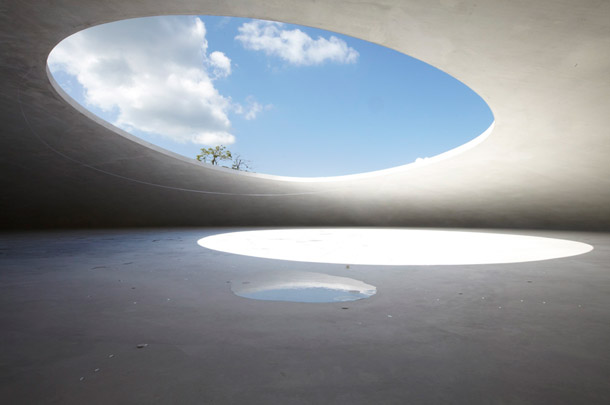
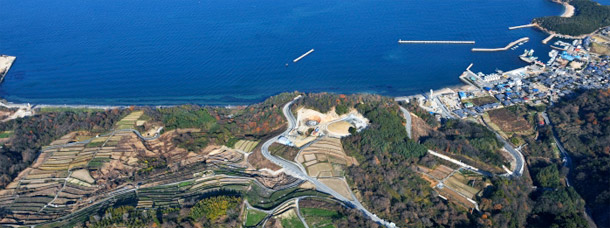
The Japanese architect Ryue Nishizawa, together with Kazuo Sejima, (founder of the SANAA office ) is the author of the newly opened art project – the Teshima Art Museum in collaboration with the sculptor Rei Naito. Although the museum, together with its spatial installation, should have opened back in July as part of the Setouchi festival, construction hitches moved the opening to the last two weeks of the festival, early November. Located on Teshima Island, the museum is the latest addition to the Benesse Art Site art project which attempts to revitalize the neglected and desolate Japanese islands of Naoshima, Teshima and Inujima.
Just like its predecessor, Tada Ando’s Chichu Museum, built in 2004 under Naoshima Island’s slopes, Nishizawa’s museum is discretely positioned in the landscape following its natural slant. Even though both museums have the intention of entwining environment and architecture, they’re still structurally quite different.


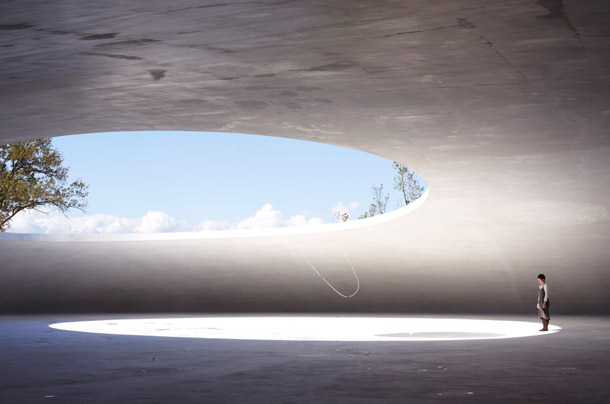
The Teshima Museum is executed as a unique concrete shell without pillars. The slightly curvy shape seems exceptionally organic and almost dematerialized. The appearance of the design evokes a water droplet thus affirming its surrounding nature. The same way rain affects the earth, the museum almost imperceptibly permeates the surrounding hills and rice paddies. With only one work of art presented within the space, that of sculptor Rei Naito entitled “Bokei” (in translation: matrix), provides a new meaning to the concept of minimalism. A sculpture of a water droplet which seems as it’s gushing from the depths to the surface. At the same time, due to two openings in the museum’s arch, rain falls into the interior, becoming an integral part of the spatial layout in its entirety.
The whole structure of the museum as an amalgam of art and architecture is created so as to reflect nature itself.

Click here for more on the museum and the Benesse Project.


