


A Catholic School at the Yugoslav Pavilion

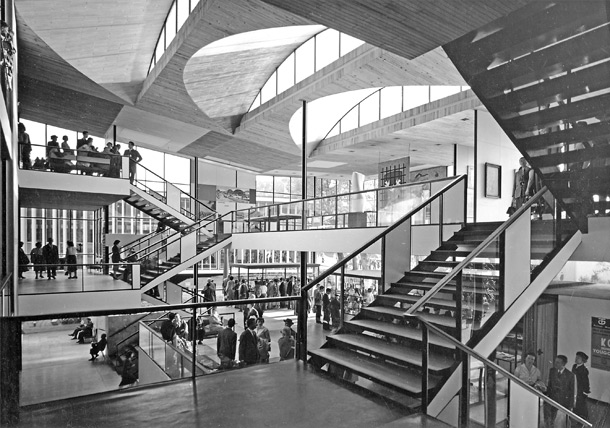
One of the rare well-known architectural realizations of Croatian architects abroad in the era of former Yugoslavia, and subsequently, is Vjenceslav Richter’s pavilion. Vjenceslav Richter designed the Yugoslav presence for the World Exhibition EXPO 1958 in Brussels. There were other successful Yugoslav pavilions for world exhibitions, even Richter’s, while that particular one was evaluated as one of the most successful at that EXPO and later obtained a permanent function. This “open” glass pavilion has been purchased and transferred to Wevelgem in Flandria, some 80 kilometers from Brussels, where it’s been housing a private catholic school to this day.
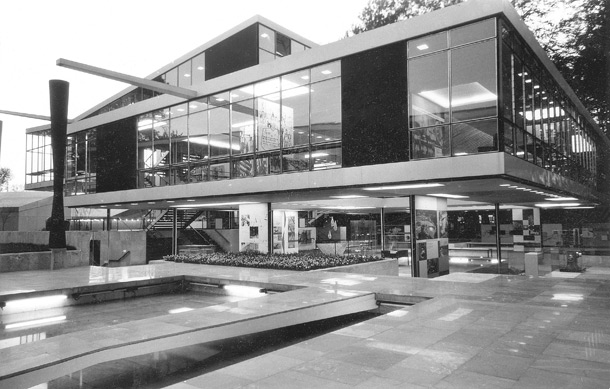
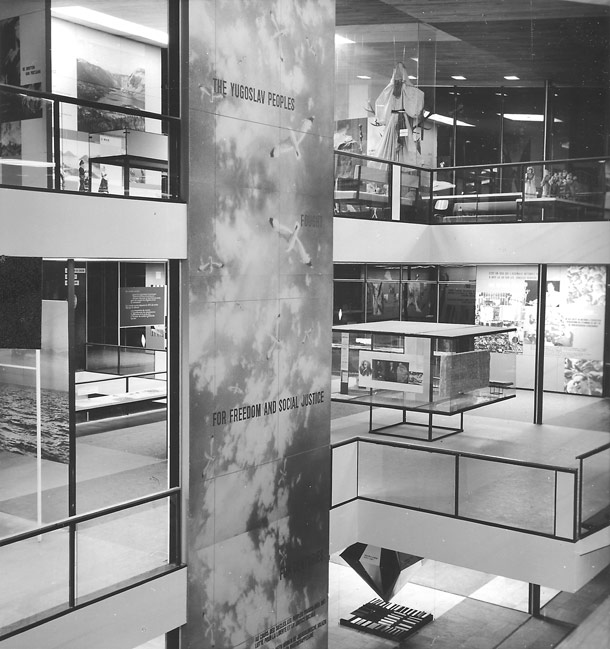
An exhibition dedicated to the Pavilion is set to open on April 14 at the Museum of Contemporary Art (the MSU). The exhibition carries the title “Architecture for a More Humane World – the Yugoslav Pavilion of Vjenceslav Richter for the Expo 58”, where the determiner “more humane” refers to the fact that in the midst of various cold war divisions the pavilion promoted openness. The Pavilion was presented from its beginnings – the competition project, through execution and construction up to the set-up’s reconstruction. The selection of the exhibit items are based on archived material from the MSU’s holdings, video and film documentation, photos, illustrations, blueprints of the pavilion along with the set-up’s details. The exhibition brings insight into other Richter’s projects as well and thematically classifies the role of propaganda exhibitions, as is the World Exhibition, from the mid-1940s to the mid-1960s for the purposes of promoting the country’s identity. Richter started out with the theme of exhibition spaces during his studies at the Department of Architecture of the Faculty of Engineering in Zagreb, and a while later started collaborating with Ivana Picelj and Aleksandar Srnec on propaganda exhibition set-ups and exhibition pavilion set-ups. During the forties and fifties, both individually and through collaborations, he worked on Yugoslavian pavilions and stands at international fairs in Milan, Trieste, Brussels, Stockholm, Vienna, Chicago, Hannover…
The exhibition represents characteristic examples that document Richter’s work at various pavilions, which is characterized, as is his entire opus, by the principle of synthesis, carried out from designing equipment to linking thematic ensembles in exhibition set-ups and defining space.
The author of the exhibition is Jasna Galjer, also the author of the book ”Expo 58 i jugoslavenski paviljon Vjenceslava Richtera”/”Expo 58 and the Yugoslav Pavilion of Vjenceslav Richter” published by the Horetzky Press two years ago.
The exhibition “For Active Art – New Tendencies Fifty Years Later ” also opens at the MSU on that same day. This exhibition is dedicated to one of the most important art movements in this country, whose members counted Vjenceslav Richter. Richter’s work can be viewed in the Villa at Vrhovac 38, where he lived, and where the Vjenceslav Richter and Nada Kareš Richter Collections are housed.
Click herefor more on Richter, his collection and his park of sculptures.
* Fotografije: Arhiv Horetzky


