Warplanes Captured in Museum
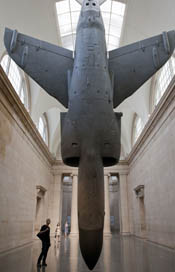
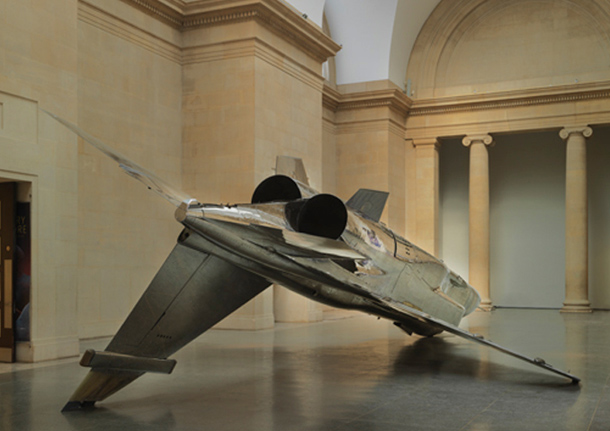
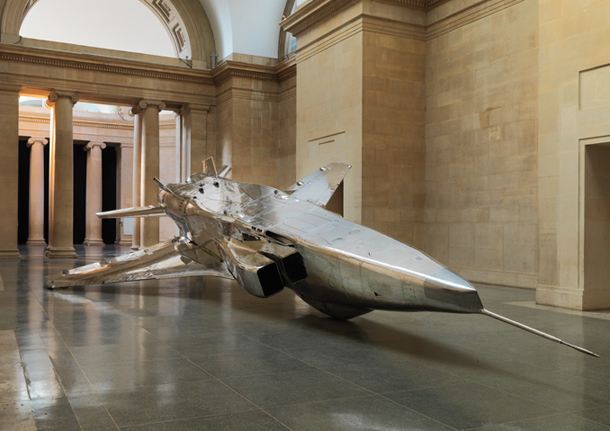
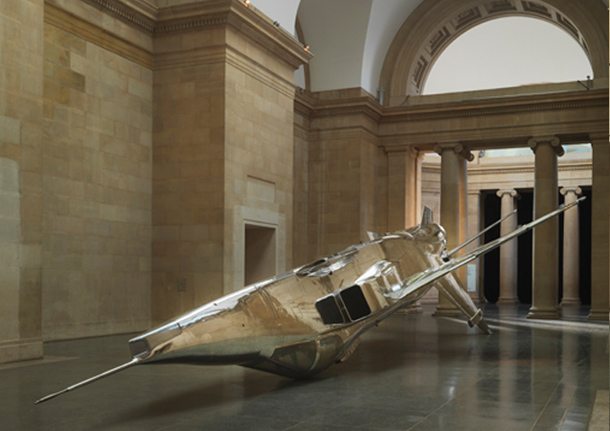
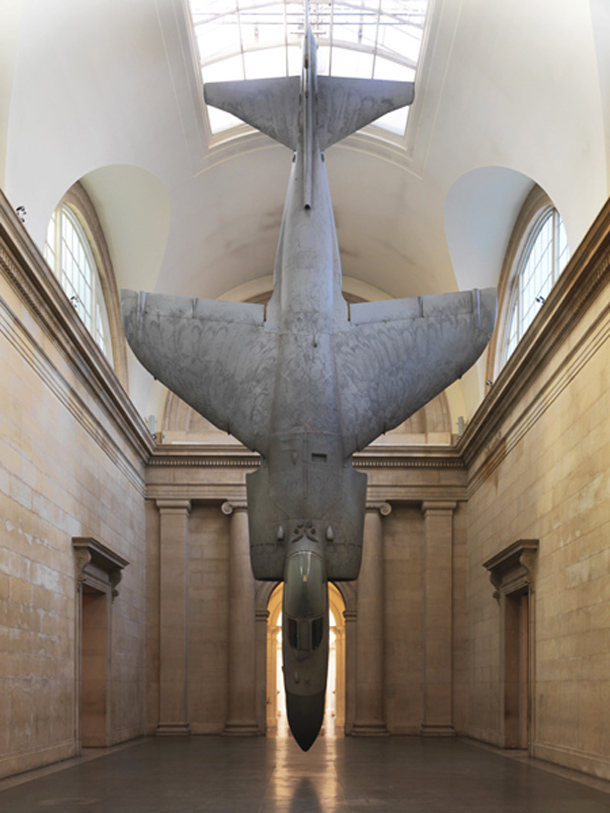
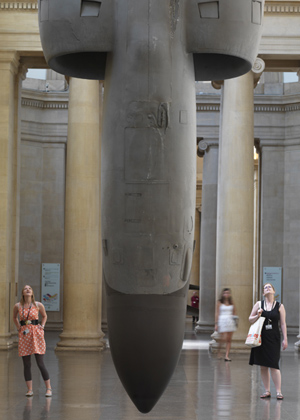
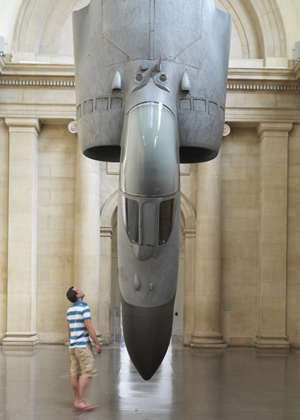
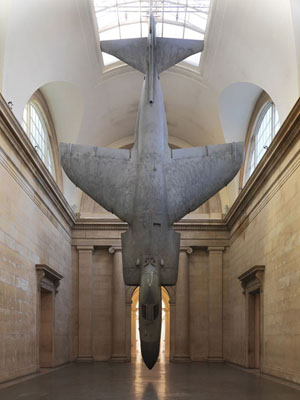
Fiona Banner, a young British artist, is one of the most perspective and awarded authors of her generation. She was shortlisted for the prestigious Turner Award in 2002, and this year is the winner of the Tate Britain Duveen Comission, which provided her with the opportunity to exhibit at the Tate Britain, surely one of the highest steps on the road to success for a young artist. Her exhibition Harrier and Jaguar was set up in the Duveen Gallery in Tate Britain late last month and is open until January 2011.
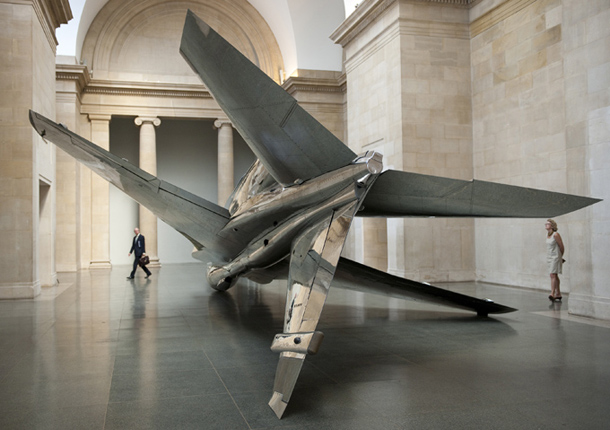
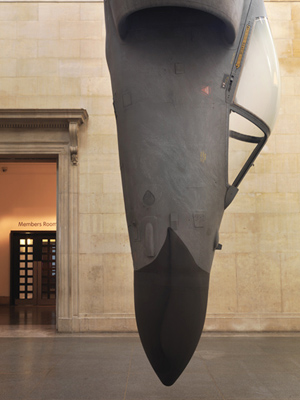
Banner has been fascinated with warplanes her whole life and emphasizes her memories of taking sublime walks with her father in the mountains in Wales, when suddenly such a warplane would rip through the sky, shattering the serenity of the moment. “A powerful sound would soar out of nowhere, the only thing you could see was the shadow of the aircraft somewhere above you and in the next moment it would just disappear.” Such strange, exciting, loud and inspiring situations literally left one breathless. “At that time such warplanes were thought to be marvels of technology, but for me they were like dinosaurs, something prehistoric, from the time before spoken words.” Fascination with aircraft and resonant sounds has resulted in producing an enormous amount of archival material inspired exactly by these horrific airplanes; drawings in pencil, newspaper collages, scale models and such are just a small portion of the young artist’s output, whose sensibility and modesty of expression enhance the contrast with heroic connotations of the theme she covers. At the exhibition in Tate Britain, Banner has set up two large aircrafts within the airy spaces of Duveen Gallery, thus enhancing the contrast of light gallery space and visibly inappropriate huge aircrafts which can be rarely seen from such proximity. For the author these objects present the “opposite of language”, very useful when communication fails. By bringing these large machines to such close proximity with people, she examines the tension between the intellectual experience of a warplane and the physical comprehension of the objects. Sea Harrier is suspended from the ceiling in the position of diving towards the ground, personifying a trapped bird and thus evoking her other name, Harrier Hawk. The warplane carrying a brave name, Jaguar, lies on the ground of the gallery turned upside down, suggesting the animal whose name it bears suddenly turning obedient. Harrier and Jaguar thus remain ambiguous objects implying both captured animals and wayward heroes, fallen trophies if you will.