


Blowing the Streets Away with Art
Baudrillard defines the street as “the alternative and subversive form of the mass media, since it isn’t, like the latter, an objectified support for answerless messages, a transmission system at a distance. It is the frayed space of the symbolic exchange of speech ephemeral, mortal: a speech that is not reflected on the platonic screen of the media.” Thus, viewing the phenomenon of street art as a new social entity that serves to emphasize existent irregularities in society seems entirely justified.
In the past few years street art has profiled itself as a way of escaping the institutional framework – negating the frame that serves as the foundation of our concept of culture, thus making it possible for artists to express themselves through writing and artistic interventions on several facades and throughout the whole city. As a type of art that lives in open spaces, it doesn’t have a commissioner, but is created by individual initiatives, and illegally at that. This illegal aspect is a rebellion of sorts towards social control which in turn is the reason for street art’s “short-lived” and endangered shelf life; street art is a continued circle of creation and destruction, a testimony to ephemeralness. The majority of artists are thrilled if their art work holds out for over a month on the streets. Of course, most artists document their larger works but are used to the disappearance of their works that were planned weeks ahead.
This way, the visual identity of the street is continually shifting, while new layers of color and paper are covering the old, creating a process of constant renovation and novelty.
The former traditional graffiti-art currently uses new techniques and colors, so it’s hard to discern the line between street art and graffiti. The terms POST-GRAFFITI and NEOGRAFFITI are used, which implies entwinement of these styles – the use of new materials: posters, stencils, stickers, synthetic materials, ceramics, collages that colonize new city spaces. Inspiration is drawn from virtually everywhere: biotechnological forms, calligraphy, ethnic samples, retro fashion, haute couture, but the moment the artist lets go of his creation, the walls become fertile ground for new forms, techniques and tactics.
Street art by its very nature transcends any and all age, society or race groups. Street art drastically differs from traditional graffiti where everything revolves around illegible letters only clear to certain individuals, while street art allows all people to integrate themselves with art by a momentary sense of connectedness with the motifs as well as creating one’s own interpretation. Street art counts on the element of surprise, having fun and enthusiasm – in any case, on the reaction and interaction of passers-by. A large number of street projects wouldn’t properly function without galleries, thus artists pay attention to the street context, i.e. the place where their works are set up in any given city. An art work within a gallery is set up in complete isolation from the area surrounding it, as well as visitors, the cultural elite that evaluates art works.
Still, we’re bearing witness to numerous transfusions of street art into galleries, where the works inevitably lose their subversive edge and get a bit too close for comfort to the art establishment. From the 2007 Art of Asphalt exhibition at the SC, through the exhibition according to Fedor Kritovc’s concept from 2008 that attempted to document protagonists from the Zagreb scene at the ULUPUH, to independent exhibitions of street artists in smaller galleries, shows that the line between the street and the gallery is a fine one.
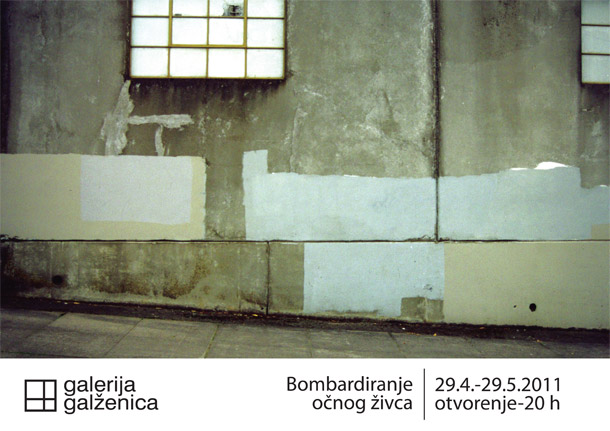
Hence the exhibition at the Velika Gorica Galženica Gallery may come as a surprise as this gallery deals with the phenomenon of street art only nominally. Fortunately, in this case they kept it that way, and the allure of setting up concrete works within the gallery’s premises was successfully avoided, while the concept of street art was approached from a phenomenon-based point of view. The curator team including Nina Pisk, Sanja Horvatinčić and Zana Šaškin opted for a documentary-problematic curator approach that included noting recent images of street art in Zagreb and Velika Gorica in lieu of a mere selection-and-valorization process. „Bombardiranje očnog živca“/“Bombarding the Optical Nerve” is a series of Šutej’s graphics from the 1960s, but also the exhibition’s title, implying the very nature of the phenomenon as an “instant dose of art on the way to work.”
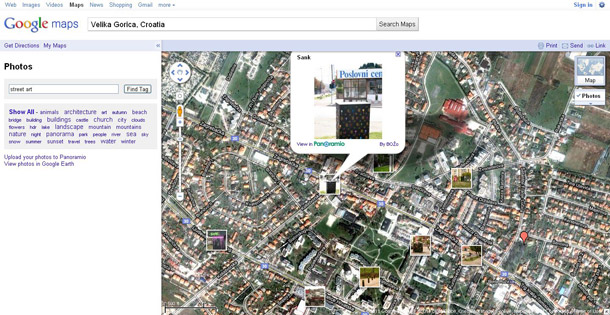
Gaz, Lonac, Sretan bor, Zlatan Vehabović, Filjio, Oko, Svenki, Artu Ditu, Lunar, Sank… are but a few names of the extremely dynamic and creative Zagreb (and surrounding area) street art scene, all of who have become highly recognizable during the past five years. Their attitude towards institutionalization and gallery representation are being presented through interviews, while the state of the situation is being displayed via a virtual map open for any and all further interpretations.
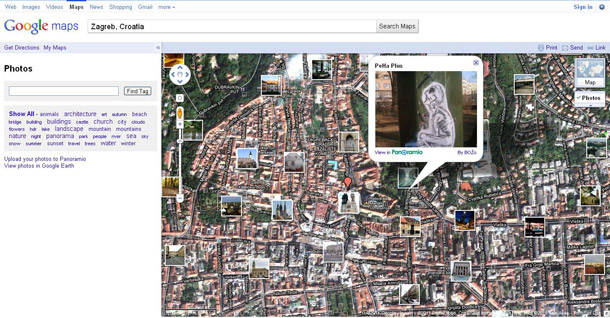
The curators point out how a significant aspect of the exhibition was shedding light on alternative positions and perspectives about this phenomenon, and they interviewed the police, municipal services, and professionals who attempted to “map out” the precise positions of street art, emphasizing the protagonists’ point of view.
It’s a fact that street art has gone from a marginal and sub-cultural phenomenon to a highly popular, widespread “trend”, which in turn speaks volumes about the nature of today’s society, while it shouldn’t be forgotten that the meta-critical approach adds to its institutionalization.
The „Bombardiranje očnog živca“/“Bombarding the Optical Nerve” exhibition opens April 29th, while you can click here for further details on the Gallery.


