The Expo in All Its G(l)ory
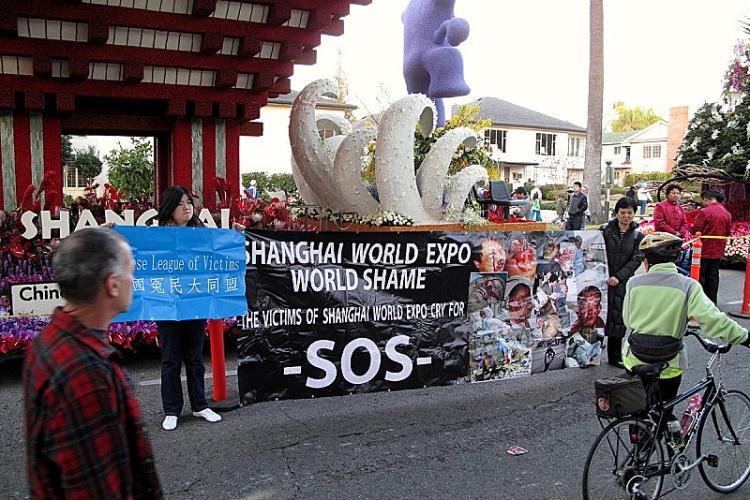
“A Better City, a Better Life” is the theme of this year’s Expo fair in Shanghai, about which we have written on several occasions, but mostly from the presentational-architectural point of view. However, it is paradoxically hypocritical that an event operating under such a slogan is in fact directly responsible for causing a drastic worsening of living conditions for over 18.000 families, who have been dislocated from their homes so as the Expo could take place in the precise way, shape and form the organizers imagined it to. In places where their homes used to be, newly built Expo entrance roads now stand.
Since late February the Chinese authorities have rendered it impossible for the Human Rights activists to organize protests and contact journalists so as to inform them about the goings-on, and pressure has additionally mounted since May 1st when the Expo opened its doors to the world.
As told to Amnesty International, Jin Yuehua, an activist from the women’s group which fights for the tenants’ rights, claimed she was under house arrest, and her house under police surveillance so as to prevent her from taking further action. She adds that anti-eviction protesters have been harassed, physically attacked and even imprisoned. The Amnesty International has on record that some individuals have even been convicted and sentenced to a year and a half of forced labor for the purpose of “re-education”, for merely protesting against the evictions, or, as it was officially noted, due to civil disturbance and unlawful interference in state affairs.
Starting from 2005, the Shanghai Expo coordinating bureau began relocating nearly 20,000 people from the central Shanghai site for which they have plans to use only for the six-month duration of the world exhibition. Whole neighborhoods where impoverished population lived disappeared and those people are homeless today. This is the flip side of the event in which immense funds are invested and it is expected to draw in a hundred million visitors.