


Derelict Industrial Plants Get A Second Chance

The purpose of the recently concluded international conference “Open Institutions” , held in Zagreb from January 20th to the 23rd, was to question and reshape the notion of a cultural institution, the issue of public resources and the cultural public domain in the era of capitalist production. A series of panel discussions and lectures were held in regard to the role progressive cultural institutions, organizations, spaces, initiatives and projects should play. The museum institution as a recycled industrial facility was the presentation theme of an interesting Central European project entitled Second Chance.

Still in its pilot phase, Second Chance took five European cities under its wing: Nuremberg, Ljubljana, Leipzig, Venice and Krakow and decided to turn their unused and derelict plants into creative and cultural work and living quarters. The rehabilitation of derelict facilities has been put forward as one of the more pressing European topics in view of developing potential and protecting existing industrial heritage. Even though the revitalization process differs in every city, each of the cities went through a detailed series of development plans, workshops and development strategies. The slogan “Industrial Use for Creative Impulse“ should attract investors as well as contribute towards the social cohesion of the city.
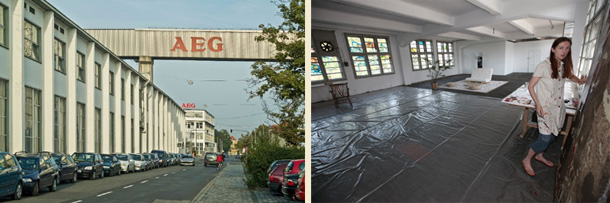
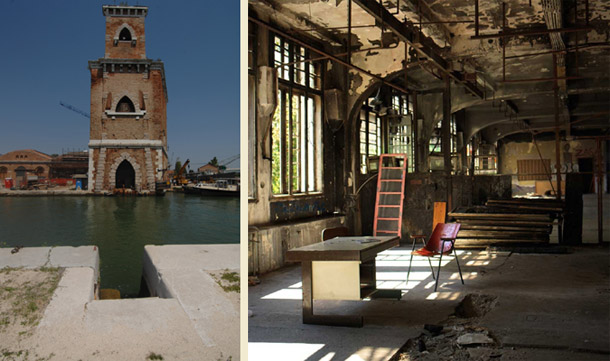
The former AEG factory in Nuremberg, with its 4000 square meters of unused space is set to become the city’s cultural center hosting a dramatic arts academy, music school and foreign language center. The cotton mill in Leipzig is envisioned as a future gallery of contemporary art, the street car factory in Krakow is set to become an industrial heritage museum. The Venetian Arsenal is also include in the project and will find its new function within the biennale exhibitions. However, the project anticipates the revitalization of the unused Arsenal tower that should become a research and gallery space, while the Ljubljana ROG factory is well on its way to transforming into a museum of contemporary art. The research phase should be completed by 2013. Luckily Europe grasped the importance of cultural goods in time.
Still, just a tad south, in the paleo-industrial collar, for example, of Zagreb, is spiraling downwards with incredible speed. Just to note the former Zagreb Tobacco factory, the half-burnt down building of the old Zagreb Paromlin (Flour-mill), facilities within the “Josip Gredelj” complex, the “Nada Dimić” factory, the “Badel” complex near Kvaternik Square… For now only the Gliptoteka functions as a meaningful and sustainable industrial facility. The others could very well use a second chance.
Click here for more about the Second Chance project


